
Haramaya University Former Presidents
Haramaya University’s leadership history reflects its evolution from a small agricultural college into a major national university, beginning with early American presidents—Dr. Luther H. Brannon, Dr. Clarence L. Angerer, and Dr. Loris A. Parcher—who established its academic foundations, followed in the 1960s by Dr. Randal J. Jones, Dr. Clyde R. Kindel, and one of the first Ethiopian leaders, Dr. Mekonnen Kibret, who guided expansion and modernization. In the politically turbulent 1970s and 1980s, leaders such as Dr. Melake Haile, Dr. Abraham Bisrat, Dr. Amare Getahun, and Dr. Aregay Waktolla maintained stability, while Dr. Demissie Wolde, Dr. Ephrem Mamo, Dr. Mengistu Huluka, and Dr. Dejene Mekonnen strengthened governance and research during the Derg and transitional periods. A major turning point came under Prof. Desta Hamito, who oversaw the university’s shift to full autonomy, followed by Prof. Belay Kassa, Dr. Girma Amente, and Prof. Chemeda Fininsa, who expanded programs, modernized systems, and enhanced research. Today, Dr. Jemal Yousuf leads the university into a new era focused on innovation, global competitiveness, and institutional transformation.
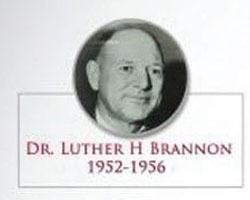
Dr. Luther H. Brannon
Dr. Luther H. Brannon, the founding president of what became Haramaya University, led the institution from 1952 to 1956 when it was first established as the Imperial Ethiopian College of Agriculture and Mechanical Arts. An American agricultural educator from Oklahoma State University invited by Emperor Haile Selassie, he designed the college’s earliest academic programs, built its administrative structures, recruited the first faculty teams, and oversaw the construction of classrooms, laboratories, and farm facilities. Brannon launched the first student cohorts and set the academic standards that shaped teaching, research, and evaluation, effectively transforming the college from a national aspiration into a fully functioning institution that laid the foundation for Ethiopia’s modern agricultural education system.
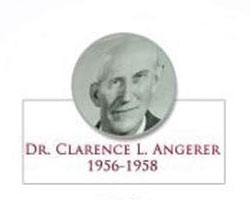
Dr. Clarence L. Angere
Dr. Clarence L. Angerer, the second president of what was then Alemaya College of Agriculture (now Haramaya University), served from 1956 to 1958 during the institution’s formative years, when it was still developing under the landmark partnership between the Ethiopian government and Oklahoma State University. As part of the OSU technical assistance team invited by Emperor Haile Selassie, Angerer helped shape one of Africa’s earliest modern agricultural colleges by strengthening academic programs, building foundational administrative systems, training early Ethiopian faculty and staff, expanding student enrollment, and improving teaching facilities. His leadership ensured continuity after founding president Dr. Luther H. Brannon and stabilized the young college so it could grow beyond its experimental beginnings and evolve into a lasting national institution.
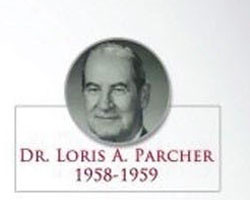
Dr. Loris A. Parcher
Dr. Loris A. Parcher, the third president of what is now Haramaya University, served from 1958 to 1959 as part of the Oklahoma State University team supporting Ethiopia’s early agricultural‑education reforms. Although his tenure was brief, he played an important stabilizing role during a period of rapid institutional development by strengthening the academic programs launched by his predecessors, ensuring smooth administrative operations, supporting faculty development in agricultural sciences, and maintaining the crucial Ethiopia–OSU partnership that shaped curriculum, staffing, and research. His leadership helped steady the young college as it transitioned from its initial establishment phase toward long‑term sustainability, reinforcing the academic culture being built and keeping the institution aligned with Ethiopia’s national goals for agricultural modernization.
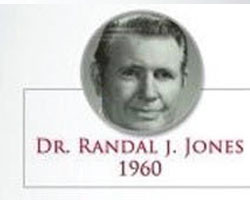
Dr. Randal J. Jones
Dr. Randal J. Jones, the fourth president of what was then the Imperial Ethiopian College of Agriculture and Mechanical Arts (now Haramaya University), served briefly in 1960 as part of the Oklahoma State University team that helped build the institution during its formative years. Stepping in during a period of rapid leadership turnover, he provided essential continuity by maintaining academic stability, supporting the expansion of agricultural teaching and field‑based training, strengthening coordination between OSU experts and Ethiopian staff, and ensuring smooth academic operations as enrollment and programs grew. Although his tenure was short, Dr. Jones played an important transitional role, reinforcing the academic standards set by earlier presidents and helping sustain the Ethiopia–OSU partnership that laid the groundwork for the university’s long‑term development
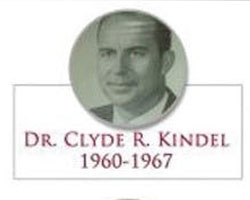
Dr. Clyde R. Kindel
Dr. Clyde R. Kindel, the fifth president of what is now Haramaya University, served from 1960 to 1967 and became one of the most influential leaders of the institution’s early decades. Coming from Oklahoma State University as part of the Ethiopia–OSU partnership, he provided the long‑term stability that earlier short presidencies lacked and guided the college through a major phase of expansion. Under his leadership, academic programs in agriculture, animal sciences, and extension education grew significantly; research activities strengthened, turning the college into a national center for agricultural innovation; and campus infrastructure—from laboratories to demonstration farms—expanded to support rising enrollment. He also improved administrative systems, supported faculty development, and helped prepare Ethiopian professionals for future leadership roles. Dr. Kindel’s presidency marked one of the most important growth periods in the university’s history, transforming it from a young institution into a structured and influential hub for agricultural education and research in Ethiopia.
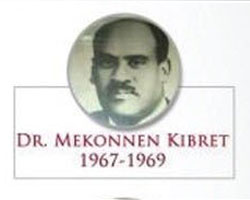
Dr. Mekonnen Kibret
Dr. Mekonnen Kibret, the sixth president of what was then the Imperial Ethiopian College of Agriculture and Mechanical Arts (now Haramaya University), served from 1967 to 1969 and became one of the first Ethiopians to lead the institution after years of American‑led administration. His appointment marked a major turning point toward Ethiopianization, as he strengthened local leadership in academic and administrative structures, expanded the role of Ethiopian faculty, and adapted curricula to better reflect the country’s agricultural realities. Dr. Mekonnen also promoted research focused on national agricultural challenges and maintained institutional stability during a politically sensitive period. By bridging the earlier OSU‑guided system with emerging Ethiopian academic leadership, he helped transform the college into an institution increasingly shaped by local expertise and national priorities
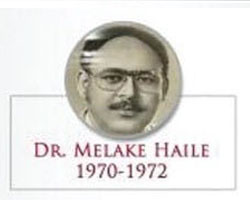
Dr. Melake Haile
Dr. Melake Haile, the seventh president of what was then the Imperial Ethiopian College of Agriculture and Mechanical Arts (now Haramaya University), served from 1970 to 1972 and belonged to the early generation of Ethiopian scholars who assumed leadership as the institution transitioned away from American administration. With a strong background in agriculture and higher education, he advanced Ethiopianization by increasing the role of local faculty and administrators, strengthened academic programs aligned with national agricultural priorities, and supported research focused on Ethiopia’s food security and rural development needs. Leading during a politically sensitive period just before the 1974 revolution, he maintained institutional stability while ensuring that curricula and training remained relevant to local challenges. His presidency helped root the university more firmly in Ethiopian academic identity and prepared it for the major national and institutional changes that would follow
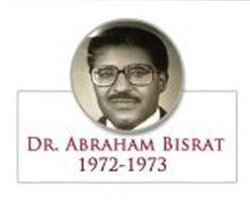
Dr. Abraham Bisrat
Dr. Abraham Bisrat, the eighth president of what is now Haramaya University, served from 1972 to 1973 during a tense pre‑revolution period when Ethiopia was assuming full national responsibility for higher‑education leadership. As part of the early generation of Ethiopian academics taking over from American administrators, he strengthened local leadership in academic and administrative roles, supported curriculum relevance to Ethiopia’s agricultural and rural‑development needs, encouraged research focused on national challenges, and maintained institutional stability despite growing political pressures. His short but important presidency provided continuity between earlier Ethiopian leaders and those who would guide the university through the Derg era, helping solidify Haramaya University’s identity as a nationally grounded institution shaped increasingly by Ethiopian expertise.
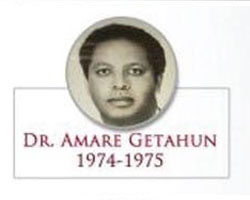
Dr. Amare Getahun
Dr. Amare Getahun, the ninth president of what is now Haramaya University, served from 1974 to 1975 during one of the most turbulent moments in Ethiopia’s modern history—the fall of the imperial government and the rise of the Derg. An accomplished Ethiopian academic and agricultural expert, he led the university through intense national upheaval by maintaining academic continuity, stabilizing operations amid political restructuring, strengthening Ethiopian leadership in academic and administrative roles, and ensuring that teaching and research continued despite widespread uncertainty. His short but pivotal presidency helped protect the institution’s academic mission, align programs with emerging national priorities, and preserve stability during a period when many institutions faced severe disruption, making his leadership a key bridge between the imperial era and the Derg period.
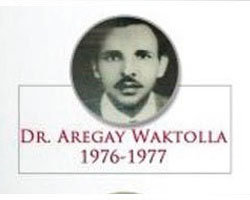
Dr. Aregay Waktolla
Dr. Aregay Waktolla, the tenth president of what is now Haramaya University, served from 1976 to 1977 during the early years of the Derg regime—a period marked by political restructuring, ideological pressure, and major shifts in Ethiopia’s higher‑education system. An Ethiopian academic and administrator from the generation that assumed full national leadership after the American‑supported era, he guided the university through a sensitive transition by maintaining academic operations, strengthening Ethiopian leadership across departments, stabilizing governance structures, and ensuring continuity in teaching and research despite national upheaval. He aligned university programs with the new government’s focus on rural development and agricultural self‑sufficiency while protecting the institution’s academic mission during rapid political change. Dr. Aregay’s short but pivotal presidency helped preserve academic integrity, reinforced the university’s identity as a nationally led institution, and served as a bridge between earlier Ethiopian leaders and those who would guide the university through the long Derg period.
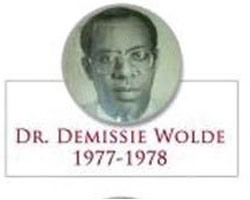
Dr. Demissie Wolde
Dr. Demissie Wolde, the eleventh president of what is now Haramaya University, served from 1977 to 1979 during the early and highly transformative years of the Derg regime, when Ethiopia’s higher‑education system was undergoing ideological restructuring and administrative reorganization. As part of the generation of Ethiopian scholars who assumed full leadership after the American‑supported era, he guided the university through a politically charged environment by maintaining academic continuity, strengthening Ethiopian leadership across departments, and preserving the institution’s core mission despite national ideological pressures. Under his stewardship, teaching and research activities continued, programs were aligned with the government’s emphasis on rural development and agricultural transformation, and governance structures were adapted to new political expectations. His presidency is historically significant for helping the university navigate the early consolidation of the Derg regime, safeguarding academic integrity, and reinforcing Haramaya University’s identity as a nationally led Ethiopian institution during one of the most challenging periods in its history.
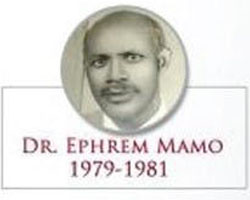
Dr. Ephrem Mamo
Dr. Ephrem Mamo is an Ethiopian researcher and academic at Haramaya University whose work spans climate‑smart agriculture, environmental science, and public health. He has contributed to advanced research through the Africa Center of Excellence for Climate‑Smart Agriculture and Biodiversity Conservation, including helping develop Ethiopia’s first Mulch‑SPAC hydrothermal model, which integrates real‑time root imaging, soil‑moisture tracking, and atmospheric data to improve decision‑making in drought‑prone farming systems. Beyond agriculture, he has played a significant role in public‑health research, contributing to national and international studies on leprosy detection, health‑worker training, mHealth tools, and infectious‑disease surveillance, with peer‑reviewed work addressing disease‑burden trends and community‑based interventions. Trained through Haramaya University’s Africa Center of Excellence and engaged in collaborations across Africa, Europe, and the United States, Dr. Ephrem embodies a rare interdisciplinary profile that bridges agricultural science, climate resilience, and public health, strengthening Haramaya University’s role as a national hub for research, innovation, and community‑oriented development.
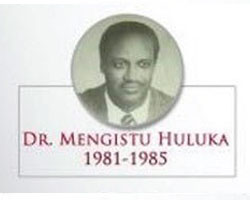
Dr. Mengistu Huluka
Dr. Mengistu Huluka, who served as president of what is now Haramaya University from 1979 to 1984, led the institution through some of the most ideologically intense and structurally transformative years of the Derg regime. Taking office during a period of national centralization and political control over higher education, he worked to maintain academic continuity, protect research activities, and keep the university functional despite heavy ideological pressure and shifting national priorities. Under his leadership, the university aligned its programs with the government’s focus on agricultural self‑reliance, rural development, and socialist‑oriented community service, while strengthening Ethiopian leadership across academic and administrative units. Dr. Mengistu played a stabilizing role by preserving teaching, research, and extension functions at a time when many institutions faced disruption, reinforcing Haramaya’s identity as a nationally led center of agricultural education. His presidency is historically significant for guiding the university through the early and middle phases of the Derg era, safeguarding academic integrity, and contributing to the long‑term resilience of one of Ethiopia’s most important higher‑education institutions.
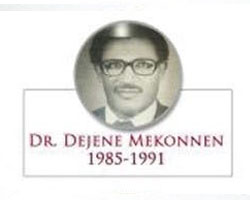
Dr. Dejene Mekonnen
Dr. Dejene Mekonnen, widely regarded as the first Ethiopian president of the Alemaya University of Agriculture (now Haramaya University), led the institution during its historic transition from foreign, OSU‑led administration to full Ethiopian academic governance. Rising from a humble background, as described in his autobiography, he became one of Ethiopia’s most respected educators and development thinkers, guiding the university as it expanded academic programs, strengthened research capacity, and deepened community engagement in line with national agricultural and rural‑development priorities. His leadership institutionalized Ethiopian control across academic and administrative structures, championed equity and opportunity in higher education, and laid the groundwork for the university’s long‑term growth into a comprehensive national institution. Dr. Dejene’s legacy endures in the strengthened academic culture he helped build, the research and outreach systems he expanded, and the generations of agricultural professionals shaped by his vision—making him a defining figure in the university’s evolution and in Ethiopia’s broader educational history.
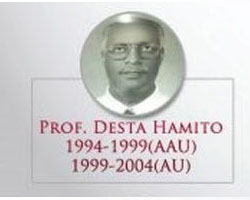
Prof. Desta Hamito
Prof. Desta Hamito, a highly respected Ethiopian scholar in agricultural sciences, served as president of Haramaya University during a period of major institutional expansion and modernization. A long‑time faculty member trained in animal sciences, he brought deep academic insight and a strong commitment to the university’s mission, strengthening academic programs, expanding postgraduate training, and enhancing research capacity in agriculture, livestock, and rural development. His leadership improved governance, advanced quality‑assurance systems, and supported the professional growth of Ethiopian faculty, helping the university evolve into a more research‑oriented and internationally engaged institution. Under his guidance, Haramaya University broadened its community outreach and extension services, reinforcing its role as a national center for agricultural innovation and rural transformation, and laying the groundwork for the rapid growth and diversification that followed in the 2000s.
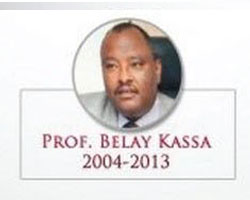
Prof. Belay Kassa
Prof. Belay Kassa, one of Ethiopia’s most distinguished agricultural economists and higher‑education leaders, served as president of Haramaya University during a period of rapid expansion, academic diversification, and rising national demand for research‑driven development. A long‑time scholar and administrator with deep expertise in agricultural economics and rural‑development policy, he strengthened the university’s academic reputation by expanding postgraduate programs, enhancing research capacity, and broadening engagement with farming communities through extension services and applied research. His leadership modernized institutional governance, improved quality‑assurance systems, and advanced professional development for Ethiopian faculty, helping the university evolve into a more research‑oriented and globally connected institution. Under his guidance, Haramaya University grew in size, academic breadth, and national influence, reinforcing its role as Ethiopia’s premier agricultural university while expanding into new scientific and social‑science fields—laying foundations that continue to shape its academic culture and research priorities today.
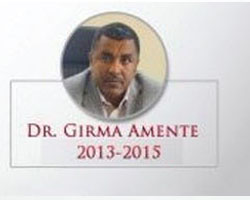
Dr. Girma Amente
Dr. Girma Amente, a prominent Ethiopian academic and public leader, served as president of Haramaya University during a period of modernization, academic expansion, and rising national emphasis on higher‑education quality and relevance. With a strong background in forestry, natural‑resources management, and rural development, he strengthened academic programs, expanded postgraduate education, and enhanced research capacity in agriculture, environmental management, and community‑oriented development—areas central to Ethiopia’s national priorities. His leadership improved institutional governance, promoted accountability and quality assurance, and fostered stronger partnerships with government bodies, regional institutions, and international universities. Under his guidance, the university broadened its outreach and extension services, reinforcing its long‑standing role as a national hub for agricultural innovation and rural transformation. His tenure helped position Haramaya University for the rapid growth and structural reforms of the 2010s, and his influence continues to shape its academic culture, research agenda, and leadership practices today..
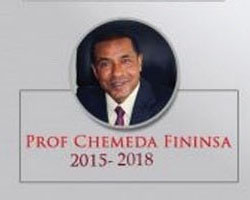
Prof. Chemeda Fininsa
Prof. Chemeda Fininsa, a highly respected Ethiopian plant pathologist and long‑serving academic leader, served as president of Haramaya University during a period of major institutional growth, academic diversification, and rising national expectations for research‑driven development. Internationally recognized for his work in crop‑disease management, he brought deep scientific expertise and decades of university service to the presidency, strengthening the university’s research culture, expanding postgraduate programs, and promoting innovation in agriculture, food security, and environmental sustainability. His leadership modernized academic governance, improved quality‑assurance systems, and fostered strong partnerships with national ministries, regional governments, and international research institutions. Under his guidance, Haramaya University broadened its outreach and extension services, reinforced its identity as Ethiopia’s premier agricultural university, and expanded into health sciences, technology, business, and social sciences. His tenure remains significant for positioning the university as a more comprehensive, research‑oriented, and globally connected institution whose academic standards and research priorities continue to reflect his influence.
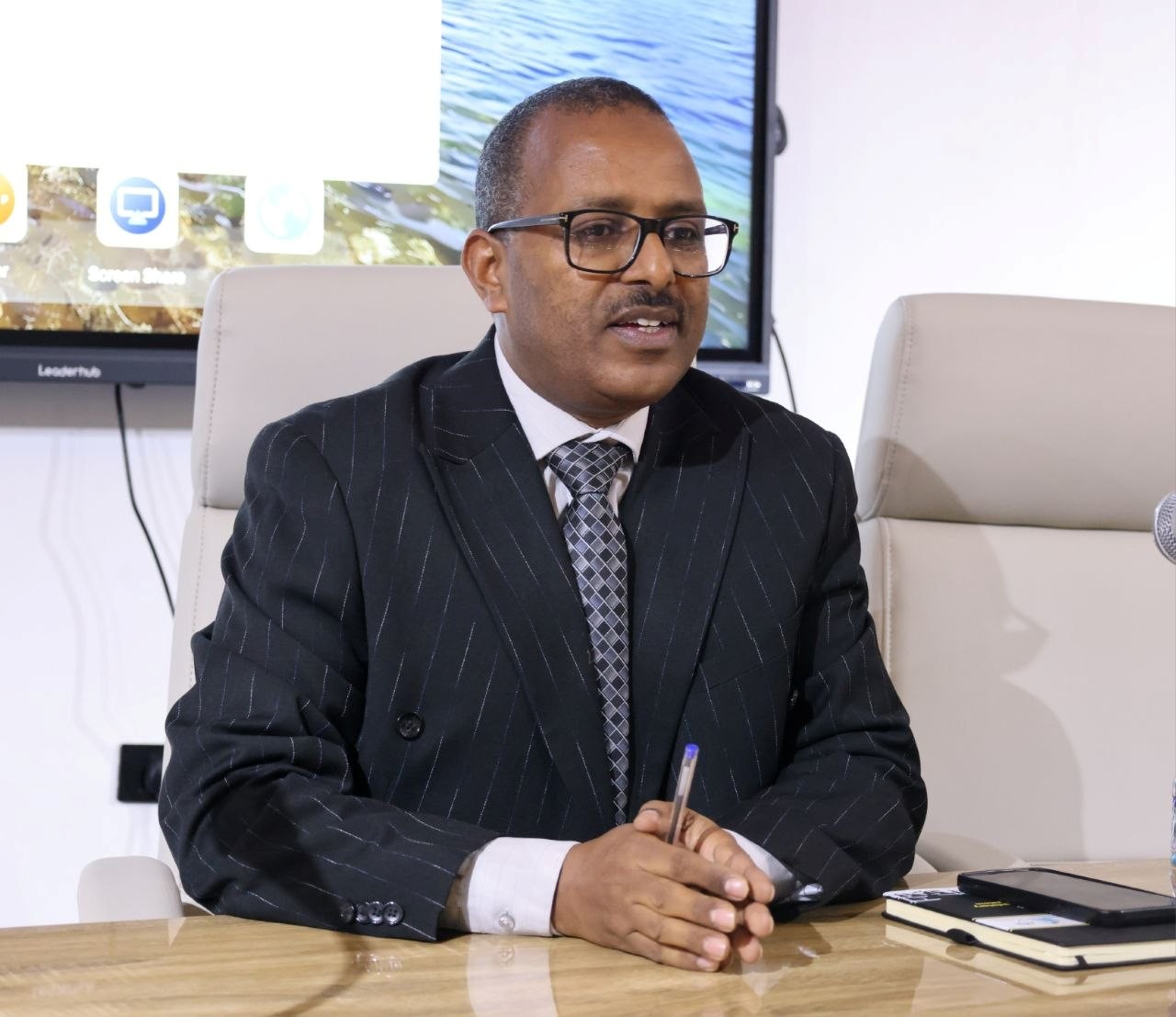
Dr. Jemal Yousuf Hassen
Dr. Jemal Yousuf, an accomplished Ethiopian scholar and development leader, served as president of Haramaya University during a period of rapid institutional transformation and national reform in higher education. With strong expertise in natural‑resources management, environmental sustainability, and community‑based resource governance, he strengthened academic programs, expanded postgraduate training, and enhanced research capacity in agriculture, natural resources, climate resilience, and food security—areas central to Ethiopia’s development priorities. His leadership modernized governance systems, improved institutional efficiency, promoted accountability and quality assurance, and fostered strategic partnerships with government bodies, regional institutions, and international universities. Under his guidance, the university broadened its outreach and extension services, reinforcing its identity as Ethiopia’s premier agricultural university while supporting its evolution into a more comprehensive, research‑oriented institution. His tenure remains significant for deepening the university’s development role, strengthening its academic foundation, and positioning it for continued growth in a rapidly changing national and global landscape.
Get in TOUCH
